
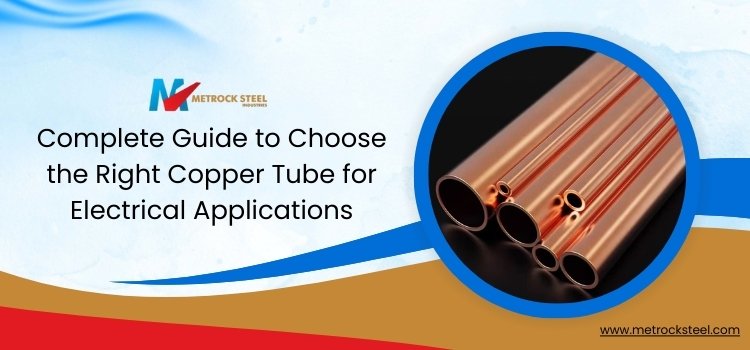
Understanding the Importance of Copper Tubes in Electrical Systems
The choice of the appropriate copper tube to use in electrical applications is a serious issue that directly impacts safety, efficiency and the long term performance. Electrical systems in the context of modern construction projects are no longer a plain web of wires, as they are complex infrastructures, which are able to support power distribution, earthing and grounding, as well as integration of renewable energy sources. Knowing Complete Guide to Choose the Right Copper Tube for Electrical Applications would thus be necessary for the heads of construction, architects and contractors who design and implement reliable electrical installations.
Copper tubes are extensively used in electricity because they are electrically conductive, highly corrosive and also quite strong. Not the copper tubes, however, all perform equally. The type of tube, wall thickness, grade of conductivity and adherence to the applicable standards are the key considerations in identifying a copper tube that will work in a particular electrical usage. With proper consideration of these factors and the ability to select the correct copper tube to use in electrical systems, those in charge can avoid cases of overheating, losses of power and unnecessarily expensive future maintenance problems.
Why Copper Tubes Are Preferred for Electrical Applications?
In electrical systems, copper has continued to form the preferred choice of material in any industry. It is suitable for low-voltage and high-voltage usage because of its characteristics.
Key reasons include:
- High electrical conductivity, ensuring minimal energy loss
- Excellent thermal performance, helping dissipate heat effectively
- Corrosion resistance is especially important in humid or industrial environments
- Long service life, reducing replacement and maintenance costs
These benefits make copper tubes the right choice when used in electrical applications, even in the most demanding conditions.
Types of Copper Tubes Used in Electrical Applications
Seamless Copper Tubes for Electrical Installations
Continuous copper conductors are commonly used in electrical applications in which uniformity of operation and strength are needed. They are produced without welded joints, and hence they have a uniform performance and low chances of weak points.
Common uses include:
- Grounding systems in electricity.
- Busbar enclosures.
- Protection of conductors of high current.
Learn more about the advantages of using copper tubes in air conditioning systems.
Hard drawn vs soft copper tubes.
To select the appropriate type of copper tube that should be used, it is important to know the difference between hard-drawn and soft copper tubes:
- Hard-drawn copper tubes are stronger in terms of mechanical strength and can be used in fixed installations.
- Soft copper tubes are more pliable, and hence they are used in electrical conduits that have many routes.
Key Factors to Consider When Choosing the Right Copper Tube for Electrical Applications
Electrical Conductivity and Copper Grade
Applications of copper tubes require high levels of purity. Find copper grades that have great conductivity to reduce resistance and power loss. Systems that have high-conductivity copper are also efficient and safe.
Wall Thickness and Diameter
The thickness of the copper tube wall has a direct influence on:
- Current-carrying capacity
- Heat dissipation
- Mechanical durability
In the case of high-load electrical systems, it is proposed to use copper tubes of increased thickness to avoid overheating and deformation.
Compliance with Industry Standards
After every use, always remember to verify that copper tubes are within the acceptable standards, like ASTM, EN or IS specifications. Copper tubes of standard size ensure uniform quality, and this is vital in large construction and infrastructure works.
Environmental and Installation Conditions
Electrical installations can be dropped in water, chemicals or temperature changes. Long-term dependability of such environments is achieved through the selection of copper tubes, which have appropriate levels of corrosion resistance and protective finishes.
Applications of Copper Tubes in Electrical Infrastructure
Copper tubes find large application in several electrical uses, such as:
- Commercial buildings’ earthing and grounding.
- Sub stations and power distribution panels.
- The industrial electrical conduits.
- Solar and wind power facilities are all renewable energy systems.
To the architects and contractors, the choice of an appropriate copper tube to use in the electrical work will not only make the use of the copper tube in electrical work comply with safety norms, but will also improve the performance of the entire system.
Common Mistakes to Avoid When Selecting Copper Tubes
These are some of the errors that can be avoided to save time and expense:
- Installation of copper tubes with no examination of conductivity ratings.
- Disregarding wall thickness requirements.
- Bending on non-standard or uncertified materials.
- Ignoring the conditions of exposure to the environment.
Information enables decision-makers to make effective and sound decisions that are technically sound.
Conclusion
To sum up, the concept of determining the selection of the right copper tube to use in electrical applications requires consideration of conductivity, type of tube, thickness of the wall, standards and situations of application. Since the smooth copper tube is to the correct copper grade, every aspect is crucial in the safety, efficiency and longevity. In the case of construction heads, architects and contractors, the right choice is not only a better electrical system performance but also a lower operational risk and cost in the long run.
FAQs
Q1. What is the most suitable type of copper tube for electrical grounding?
High-conductivity seamless copper tubes are the best to use in an electrical grounding system because they are uniform and also durable.
Q2. Was the thickness of the wall important for copper tubes in electricity?
The heavier walls enhance the current-carrying and cooling capabilities, and hence they can be used in high-loading electrical installations.
Q3. Do electrical projects require copper tubing that is standard certified?
Yes, standard-certified copper tubes are safe, have high quality, and are in line with industry standards, particularly when dealing with large constructions.
Ready to improve safety and performance by choosing the right copper tube for electrical applications? Get expert guidance tailored to your project needs. Contact us today or email us at sales@metrocksteel.com to discuss high-quality copper tube solutions for modern electrical infrastructure.