
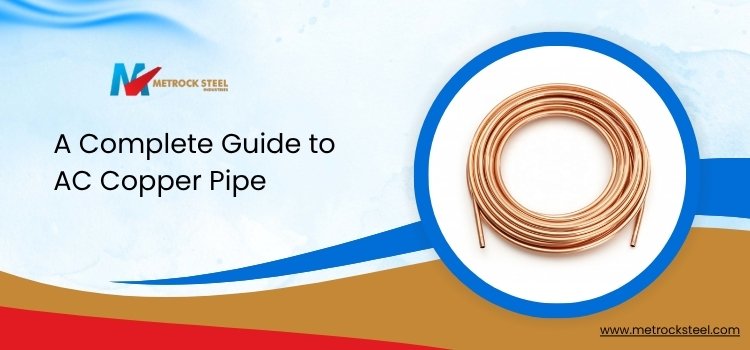
A Complete Guide to AC Copper Pipe for Cooling Systems
When it comes to air conditioning systems, the quality of your AC copper pipe is crucial for efficient and uninterrupted cooling. Thanks to their toughness, durability, and superior heat transmission, copper pipes are the standard for heating, ventilation, and air conditioning (HVAC) systems in both homes and businesses. This guide covers the 5 main pipe types, common sizing by tonnage, and installation tips you need before specifying or ordering pipe for a job. If you are deciding whether copper is the right material class in the first place, our piece on why copper pipes are the best choice for air conditioners covers that question in more depth. This page assumes copper is your material and focuses on picking the right type and size.
Why AC Copper Pipe Is Essential
Refrigerant moves between the indoor and outdoor AC units via AC copper pipes. Without the correct pipe for your AC system, you may end up with poor cooling, refrigerant leaks, or higher energy bills.
A few reasons copper qualifies as the standard choice:
- Excellent thermal conductivity
- Durable under pressure cycling
- Corrosion resistant
- Simple to bend and install
- Performs well under high pressure
Types of Copper Pipes Used in AC Systems
1. Soft Copper Pipes
- Flexible and easy to bend
- Comes in coils, typically 15-30 m or more
- Used where fewer joints are desired
- Common in residential split AC installations
2. Hard Copper Pipes
- Rigid, supplied in straight lengths
- Requires elbows and fittings for bends
- More durable, commonly used in commercial HVAC systems
3. Copper Pipe by Wall Thickness
The most common types, in order of wall thickness:
| Type | Wall Thickness | Typical Use |
|---|---|---|
| Type K | Thickest | Underground refrigeration lines, heavy-duty applications |
| Type L | Medium | Most HVAC and air conditioning systems |
| Type M | Thinnest | General plumbing, generally not recommended for refrigeration due to lower pressure rating |
For AC systems, Type L copper tubing is the most common choice since it balances strength and cost well. If you are also specifying pipe for plumbing runs on the same project, our breakdown of the difference between copper tube types K, L, and M goes into more detail on where each type fits.
4. Insulated Copper Pipe
- Copper tube pre-covered with closed-cell insulation, such as nitrile rubber
- Prevents condensation and reduces energy loss
- Commonly used for the suction line in split AC installations
5. Pair Coil (Twin Copper Pipe)
- Two insulated copper tubes bundled together: a larger suction line carrying low-pressure gas and a smaller liquid line carrying high-pressure refrigerant
- Widely used for split and inverter ACs
Common Copper Pipe Sizes for Split ACs
| AC Capacity | Liquid Line | Suction Line |
|---|---|---|
| 1.0 Ton | 1/4 in (6.35 mm) | 3/8 in (9.52 mm) |
| 1.5 Ton | 1/4 in (6.35 mm) | 1/2 in (12.7 mm) |
| 2.0 Ton | 3/8 in (9.52 mm) | 5/8 in (15.88 mm) |
| 2.5 Ton | 3/8 in (9.52 mm) | 5/8 in (15.88 mm) |
| 3.0 Ton | 3/8 in (9.52 mm) | 3/4 in (19.05 mm) |
Selecting the appropriate AC copper pipe size matters for maintaining correct refrigerant flow, and the required size depends on the cooling capacity of the unit. As a rule of thumb: 1/4 inch for the liquid line on smaller units, 3/8 inch for the suction line on smaller systems, and 1/2 inch or larger as tonnage increases. For dimensional tolerances and wall thickness specs across sizes, the ASTM B280 standard for seamless copper tube used in air conditioning and refrigeration is the reference most manufacturers work to.
Installation Tips for AC Copper Pipe
Proper installation ensures a long, reliable service life:
- Insulation: always insulate the suction line to prevent energy loss and condensation
- Jointing: use brazed joints for a strong, leak-free connection. Our copper fittings are sized to match standard AC pipe diameters
- Bending: use a proper pipe bender and avoid sharp kinks that could obstruct refrigerant flow
- Leak testing: always perform a pressure test before charging the system with refrigerant
Common Failure Points and Maintenance
Even well-installed AC copper pipe can develop pinhole leaks over time, most often from formicary corrosion caused by prolonged exposure to moisture, volatile organic compounds, and airborne contaminants near the indoor coil. Routine inspection of exposed joints and the insulation jacket around the suction line catches most of these issues early. Coastal or high-humidity installations benefit from the same corrosion-resistant practices covered in our brass vs copper pipes corrosion resistance comparison, even though that piece is written for outdoor plumbing rather than refrigerant lines.
Benefits of Using Copper Pipe for Air Conditioning
- High heat transfer efficiency: faster, more efficient cooling
- Strength and durability: withstands high pressure and temperature variation
- Corrosion resistant: long, low-maintenance lifespan
- Energy efficient: reduces strain on the compressor, saving electricity
Conclusion
AC copper pipe is a fundamental component of any reliable air conditioning system. Choosing the right type, matching pipe size to system tonnage, and following correct installation practices are the steps that determine whether a system runs efficiently for 20 years or starts leaking within a few. Use the tables above as a quick sizing reference, and follow proper brazing and insulation practices during installation to protect that investment.
FAQ: AC Copper Pipe
Which copper pipe is best for AC installation?
For household ACs, soft copper pipes are generally recommended, while hard copper is preferred for larger commercial systems.
Is it okay to use aluminum pipe instead of copper for an AC?
Copper is preferred because it transfers heat more efficiently and is more durable than aluminum over the life of the system.
How long does an AC copper pipe last?
With proper installation and insulation, an AC copper pipe can easily last more than 20 years.
What is the most common cause of AC copper pipe failure?
Pinhole leaks caused by formicary corrosion are the most common failure point in AC copper lines, usually from prolonged exposure to moisture and airborne contaminants around the indoor unit.
Need reliable AC copper pipe solutions? Ensure efficiency and long-lasting performance for your cooling system. Email us at sales@metrocksteel.com or contact us today.