
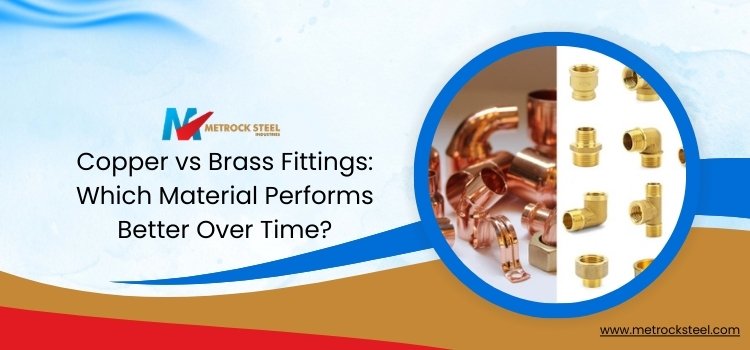
Understanding Material Performance in Plumbing and Construction Systems
Choosing the right material for plumbing and construction is critical for ensuring durability, managing maintenance costs, and guaranteeing long-term performance. For architects and contractors, the debate over copper vs brass fittings is a common one. Both materials are widely used in plumbing, HVAC, and industrial piping, but their differences become more apparent over time.
This guide explores the key distinctions to help you understand the difference between copper and brass fittings. While copper is known for its excellent corrosion resistance and antimicrobial properties, brass offers superior strength and machinability. Determining which is better, copper or brass fittings, depends on the specific application, operating conditions, and desired lifespan of the system. A careful assessment will help you select the right material to optimize performance and minimize future expenses.
Difference Between Copper and Brass Fittings
The distinction between copper and brass fittings largely depends on their structure and mechanical characteristics.
Copper is a pure metal, whereas brass is an alloy consisting primarily of copper and zinc. This composition variation influences strength, corrosion resistance, flexibility, and long-term stability.
Key differences include:
Copper fittings
- Made from nearly pure copper.
- Excellent corrosion resistance in water systems.
- Naturally antimicrobial.
- Softer and more flexible.
Brass fittings
- Alloy of copper and zinc.
- More resilient and durable under pressure.
- More resistant to cracks and mechanical stress.
- Easier to machine into complex shapes.
These differences make the choice between copper and brass fittings a critical decision for any residential, commercial, or industrial project.
Copper Fittings vs Brass Fittings in Strength and Durability
When it comes to strength and durability, the choice between copper and brass fittings is crucial for long-term performance.
Brass fittings tend to be more mechanically strong than copper fittings. This ensures that they are stronger to cracking, deformation or damage when installing or operating.
Strength comparison highlights:
Copper fittings
- Good flexibility and malleability.
- Less resistant to mechanical stress.
- Ideal for standard, moderate-pressure plumbing.
Brass fittings
- Higher tensile strength.
- More resistant to impact and vibration.
- Perfect for high-pressure industrial applications.
In large-scale infrastructure, the comparison often favors brass where strength and resistance to mechanical wear are primary concerns.
Copper vs Brass Fittings Cost Comparison
Budget is a significant factor for any project. The copper vs brass fittings cost comparison can influence material selection, especially on large-scale jobs.
Raw material prices of copper fittings are normally high since copper prices in the global markets vary considerably. Brass fittings are also made of copper, but in some cases cost more efficiently, based on alloy content.
Cost considerations:
Copper fittings
- Higher initial material cost.
- Lower machining complexity.
- Excellent long-term value and reliability.
Brass fittings
- Often more cost-effective in large quantities.
- Higher machining costs for complex components.
- Lower failure risk in high-stress systems.
Understanding the copper vs brass fittings cost comparison helps planners balance initial investment with long-term operational value.
Copper vs Brass Fittings: Advantages and Disadvantages
Each material has its unique strengths and weaknesses. Evaluating the pros and cons of copper vs brass fittings helps professionals make an informed decision based on their specific application.
Advantages of copper fittings
- Excellent corrosion resistance.
- Naturally antimicrobial and bacteria-resistant.
- Safe and stable for potable water systems.
- Proven track record in the plumbing industry.
Disadvantages of copper fittings
- A softer metal that is less durable under high stress.
- Higher raw material cost.
- Can deform under extreme mechanical pressure.
Advantages of brass fittings
- Superior strength and durability.
- Highly resistant to cracking.
- Excellent machinability for precise fittings.
- Good overall corrosion resistance.
Disadvantages of brass fittings
- Slightly heavier than copper.
- Certain alloys may contain lead, requiring careful selection for potable water systems.
The choice between copper and brass fittings should always be weighed against the project’s specific environmental and operational demands.
Copper vs Brass Fittings Maintenance Comparison
Long-term performance is also affected by maintenance needs. A copper vs brass fittings maintenance comparison reveals how each material holds up over years of service.
Copper fittings maintenance
- Requires minimal maintenance in clean water systems.
- Naturally resists corrosion, preventing buildup.
- Develops a natural patina over time, which does not affect performance.
Brass fittings maintenance
- Extremely durable and resistant to mechanical stress.
- Less prone to cracking or fatigue from pressure changes.
- May require periodic inspection in highly corrosive environments.
Overall, both materials are highly reliable when installed correctly and used in the appropriate conditions.
Conclusion
In conclusion, the choice between copper or brass fittings depends on a project’s specific needs for strength, cost, corrosion resistance, and maintenance. The primary difference between copper and brass fittings lies in their composition and mechanical properties. While copper excels in corrosion resistance and is a trusted choice for water systems, brass offers superior strength and durability for more demanding environments. By carefully weighing the copper vs brass fittings comparison, architects and contractors can make an informed decision that ensures reliable, long-term performance.
FAQs
Which is better for plumbing: copper or brass fittings?
Copper fittings are superior in terms of potable water systems because they are not only resistant to corrosion but also antimicrobial, whereas brass fittings are even favored in high-pressure systems, owing to their strength.
What is the main durability difference between copper and brass?
The main durability difference is strength. Brass fittings are harder, stronger, and more resistant to cracking and mechanical stress than the softer, more flexible copper fittings.
How does the cost of copper vs. brass affect project budgets?
The copper vs brass fittings cost comparison is crucial for budgeting. Copper often has a higher upfront material cost, while brass can be more economical in bulk but may have higher machining costs. Contractors must balance this initial investment against long-term maintenance savings.
Looking for reliable plumbing materials for your next infrastructure project? Learn more about copper fittings vs brass fittings and choose the right solution for long-term performance. Contact our experts today to discuss your project requirements or email us at sales@metrocksteel.com for professional guidance.