
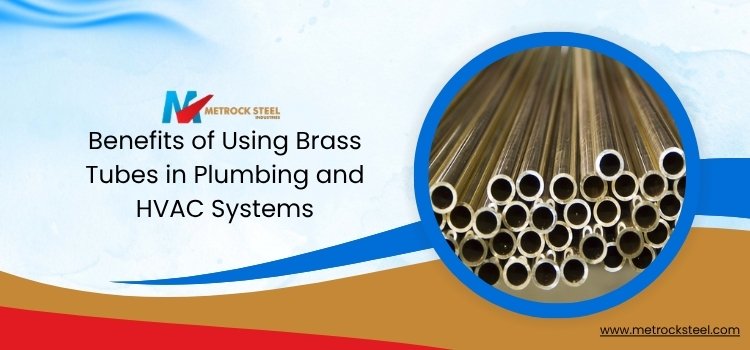
Brass Tube or Copper Tube: How to Choose for HVAC and Plumbing?
Brass tube vs copper tube is one of the first decisions engineers and contractors face when specifying tubing for an HVAC network or a plumbing retrofit, and the choice usually comes down to trade-offs rather than a clear winner. A brass tube offers a strong balance of corrosion resistance, durability, and heat tolerance that makes it a dependable pick for hostile or high-wear conditions, while copper still edges it out on raw thermal conductivity. This guide breaks down where brass tube earns its place, how it compares to brass pipe and to copper, and when each material is the right call.
As part of this article, we will discuss the Key Benefits of Brass Tubes in Plumbing & HVAC, compare a brass tube and a pipe, and explain why professionals are increasingly turning to Brass Plumbing Pipe and brass tube stock to ensure the quality performance of their systems.
Key Benefits of Brass Tubes in Plumbing & HVAC
1. Exceptional Corrosion Resistance
Resistance to corrosion of a brass tube is one of the product’s most significant benefits. Brass also resists rust in plumbing areas where water flows or in HVAC systems subjected to condensation, unlike steel or iron.
The property greatly extends the system’s lifespan and reduces maintenance, particularly in chemical-active or humid environments.
2. High Durability and Strength
Brass is strong yet flexible, and thus it can withstand any pressure and mechanical strain without cracking. Brass Plumbing Pipe has structural integrity compared to other materials, even under changing temperatures and pressure.
This is why it applies to hot- and cold-water systems and to HVAC heat-exchange applications.
3. Excellent Thermal Conductivity
Efficient heat transfer is essential in HVAC systems. Brass has high thermal conductivity, which enables it to conduct heat in condensers, radiators, and heat exchangers.
This performance also raises the overall performance of the system and minimizes energy utilization, a critical aspect of large-scale industrial HVAC activity.
4. Ease of Fabrication and Machining
Another significant advantage of brass tube stock is its high machinability. Brass is simple to cut, bend, and shape without loss of strength.
This is not only quicker and more affordable to install, but also easier to fit into complex HVAC designs or plumbing systems.
5. Leak Resistance and Tight Sealing
Fittings When used with fittings, brass tubes have better sealing capabilities. Their surfaces are smooth, and their dimensions are accurate, thus minimizing leaks, particularly in plumbing and in HVAC systems.
This dependability guarantees long-term system efficiency and safety.
6. Antimicrobial Properties
The nature of brass is that it has antimicrobial properties, which prevent bacterial and pathogen proliferation. This makes brass pipes in plumbing and HVAC systems especially useful in hospitals, commercial structures, and residential water systems, where hygiene is paramount.
Brass Tube vs Pipe: What’s the Difference?
Understanding the difference between a brass tube and a pipe is crucial when selecting the right material for your application.
| Feature | Brass Tube | Brass Pipe |
| Measurement | Based on outer diameter (OD) | Based on nominal pipe size (NPS) |
| Wall Thickness | Precise and consistent | based on schedule |
| Applications | HVAC systems, instrumentation | Plumbing and fluid transport |
| Surface Finish | Smoother, ideal for fittings | Rougher compared to tubes |
In most HVAC systems, a brass tube is preferred due to its precision and smooth surface, while Brass Plumbing Pipe is commonly used in water supply systems.
Sustainability and Cost Efficiency
Brass can also be recycled, making it an environmentally friendly material. Also, the initial price of brass might be higher than that of other metals, but its longevity and low maintenance needs lead to long-term cost savings.
This translates into lower lifecycle expenses and greater system reliability for supply chain managers and engineers.
Conclusion
The Key Benefits of Brass Tubes in Plumbing and HVAC have clearly explained why this material remains one of the best options across various industries. A brass tube will be incomparable, particularly in terms of corrosion protection, life cycle, thermal efficiency, and fabrication.
It does not matter whether we Different brass tube vs pipe, or pick high-quality brass tube stock; professionals can count on long, effective, and sustainable performance of the system using brass.
FAQs
Q1. Why are brass tubes used in HVAC systems?
HVAC systems are equipped with brass tubes because they are highly thermally conductive, corrosion-resistant, and durable, thereby increasing system efficiency and lifespan.
Q2. What is the difference between brass tube and a brass plumbing pipe?
A brass tube is slightly more precise, measured by outer diameter, and is mainly used for transporting fluids; Brass Plumbing Pipe is available in nominal sizes.
Q3. Are brass tubes better than copper for plumbing?
Brass tubes are more corrosion-resistant and durable than copper, but copper can be slightly better at thermal conductivity. The decision made will be based on the application.
Looking for premium brass tube stock or reliable Brass Plumbing Pipe for your next plumbing or HVAC project? Contact us today for a custom quote or email us at sales@metrocksteel.com to ensure quality, performance, and long-term value in every installation.