
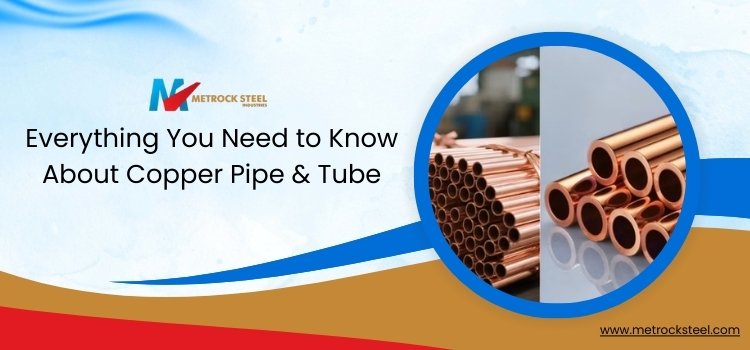
Understanding the Importance of Copper Pipe & Tube in Modern Construction
In regard to trustworthy plumbing, HVAC systems, and industrial piping, Everything You Need to Know About Copper Pipe & Tube begins with the explanation of why it has been one of the best over the decades. Copper pipes and tubes are common in residential and commercial as well as large-scale infrastructure applications due to their unusual combination of durability, performance, and safety.
To construction heads, architects, and contractors, selecting an appropriate piping material is not merely a technical choice, but it has a direct impact on the costs, maintenance in the long term, energy saving, and the life of the project. Copper pipe and copper tube are praised due to good thermal conductivity, resistance to corrosion, and high-pressure and temperature change. Be it water supply, gas lines, air conditioning system, copper has been able to keep abreast with the current building standards, as well as accommodating the changing construction technologies.
Types, advantages, uses, installation factors, and frequently asked questions will be discussed in this guide so that you can make an informed decision when specifying copper pipe and tube in the next project you are going to undertake.
What are Copper Pipes and Copper tubes?
Hollow cylindrical products, copper tubes and copper pipes are manufactured from refined copper and are used to carry fluids and gases. Although the two terms are synonymous, technically, there is a distinction:
- Copper pipe: It is typically nominal pipe size (NPS) and wall thickness.
- Copper tube: Characterized by effective wall thickness and actual outside diameter.
Copper pipe and tube forms also play a fundamental role in the building industry as both forms are used in construction, plumbing and industrial systems.
Key Types of Copper Pipe & Tube Used in Construction
Type K Copper Tube
- Widest diameter of the copper tubes.
- Perfect for the underground water lines and heavy-duty use.
- Maximum strength and life span.
Type L Copper Tube
- Medium wall thickness
- Usually used in domestic and commercial plumbing.
- A compromise between the cost and durability.
Type M Copper Tube
- Thinner wall thickness
- Applied in low-pressure residential.
- Economical in minor ventures.
Flexible Copper Tubing
- Bends easily and does not have fittings.
- Fits in narrow areas of installation.
- Typical HVAC and refrigeration applications.
wish to learn more about the differences between L, K, and M copper tube types.
Why Copper Pipe & Tube Are Preferred by Industry Professionals?
Durability and Long Service Life
Copper pipe & tube can last over 50 years when properly installed. This makes them ideal for large buildings where replacement costs are high.
Corrosion Resistance
Copper has natural resistance to corrosion even in different water qualities, and it also minimizes the occurrence of leakages and failure of the system.
Excellent Thermal Conductivity
This characteristic of copper tube makes it ideal for:
- Air conditioning systems
- Refrigeration lines
- Hot water distribution
Fire and Heat Resistance
Copper will not burn or produce fumes that are harmful to health, unlike plastic options, making it a better building material.
Applications of Copper Pipe & Tube Across Industries
Copper pipe and tube find wide application in:
- Commercial and residential plumbing systems.
- Heating, ventilation, and air conditioning.
- Gas distribution lines.
- Solar heating systems.
- Process piping and industrial machinery.
This flexibility also makes the choice of materials easier for architects and contractors in various building systems.
Installation of Copper Pipe and Tube.
Copper pipe and tube should be installed properly to obtain optimum performance:
- Select the appropriate type, depending on pressure and temperature.
- Make sure that you have appropriate techniques of jointing, e.g. soldering or brazing.
- Permit thermal expansion of long pipe runs.
- Adhere to the local building standards and codes.
Proper installation not only enhances performance but also increases system life.
Environmental and Sustainability Benefits of Copper
Copper is a building material that fits the modern green building objectives:
- Can be recycled and does not lose its quality.
- Minimizes the impact of the building on the environment during the building lifecycle.
- Promotes energy-saving systems.
This renders copper pipe and tube a viable option when planning long-term infrastructure.
Conclusion
Finally, the knowledge of Everything You Need to Know about Copper Pipe and Tube will enable the construction leaders, architects, and contractors to make better material decisions. We discussed the nature of copper pipes and tubes, their benefits, their major uses and installation factors to consider. Copper has a high level of durability, safety, thermal efficiency and sustainability. Copper pipe and tube can be a part of trustworthy systems, reduce maintenance expenses, and improve building performance when it is specified properly.
FAQs
Q1. What is better about copper pipe and tube than plastic?
Copper pipe and tube have a greater heat resistance, longer life and are safer than the plastic piping systems.
Q2. What copper tube is recommended to use in commercial buildings?
A copper tube is normally used in a commercial project because of its compromise strength, durability, and cost.
Q3. Can copper pipes be used in the HVAC and air conditioning systems?
Copper tubes would be the best choice in the HVAC system due to their high thermal conductivity and pressure rating.
Looking for high-quality copper pipe & tube for your next construction or infrastructure project? Connect with trusted suppliers today to ensure durability, safety, and long-term performance. Contact us now or email us at sales@metrocksteel.com to discuss your project requirements and get expert guidance.